The Hidden Curio Journal
The 30-day object test: a better way to decide what deserves space in your home
A practical month-long test for separating objects that genuinely improve a routine from purchases that merely make a good first impression.
Most buying advice concentrates on the moment before checkout: compare specifications, read reviews, decide whether the price feels fair. The more revealing part often happens afterwards. An object can look convincing on day one and become mildly irritating by day twelve; another can seem almost unremarkable at first and quietly earn a permanent place because it removes the same small friction every day.
The 30-day object test is a way to judge that difference. It is not a challenge to buy something and return it after a month. It is a framework for evaluating an object you already own, have recently bought, or are considering replacing. The aim is to observe use rather than manufacture reasons to justify a purchase.
Week one: notice what the object asks from you
For the first seven days, pay attention to setup and interruption. Does the object need a special charger, a particular app, a proprietary refill or a permanent patch of clear worktop? Does it need to be assembled before every use and put away afterwards? Does cleaning it take longer than the task it performs?
These details matter because ownership has a cost measured in attention as well as money. A beautifully designed coffee maker that adds ten minutes of awkward cleaning may be perfect for someone who enjoys the ritual and poor for someone who wants coffee while getting children out of the door. The product has not changed; the fit has.
Write down friction when it occurs. Do not score it yet. A single awkward interaction can be unfamiliarity. Repeated awkwardness is design information.
Week two: count actual use, not imagined use
During the second week, count how often the object is used without deliberately trying to use it more. This is where aspirational purchases reveal themselves. A kitchen tool bought for a future version of your cooking habits, a notebook system that requires a new planning ritual, or a desk accessory designed for a workflow you do not actually have can all remain excellent products while being poor purchases.
Frequency also changes the economics. Paying £20 more for something used twice a day can mean less than paying £5 extra for something used twice a year. Cost per use is imperfect, but it forces price into the context of a real routine.
Do not reward an object simply for being visible. A lamp can earn its place by improving a room every evening; a decorative appliance can occupy the same visual space while doing almost nothing. Ask what changes when the object is removed.
Week three: look for secondary costs
The third week is about everything that did not appear on the price label. Consumables, filters, batteries, subscriptions, replacement heads and proprietary accessories can turn a modest purchase into an expensive relationship. Space is another secondary cost. So is noise. So is the need to keep an instruction manual because the controls never become intuitive.
Repairability belongs here too. Identify the part most likely to wear first and see whether it can be replaced. You do not need to dismantle anything. A quick check for replacement batteries, seals, cables or manufacturer support is enough to tell you whether the product has been designed as a maintainable object or a sealed event.
This week is also a useful point to check whether one object has made another redundant. A good purchase can simplify a home by replacing two weaker tools. A bad one often creates a new category of storage.
Week four: judge the improvement, not the novelty
By the final week, novelty has usually faded. That is useful. Ask a simple counterfactual question: if this object disappeared tonight, what would I miss tomorrow?
The strongest answers are specific. “I would miss being able to see the time at night without reaching for my phone.” “I would miss the handle because it makes the pan easier to lift.” “I would miss the lamp because this corner is noticeably calmer in the evening.” Weak answers tend to describe the object rather than its effect: “It looks premium,” “it was highly rated,” or “I got a good deal.”
Appearance is allowed to be part of the benefit. Everyday objects live in our visual environment, and visual calm or delight can be real value. The test is whether you continue to notice that value after the excitement of acquisition has passed.
A five-line verdict
At the end of 30 days, write five short lines:
- Use: how often did I naturally use it?
- Friction: what repeatedly annoyed me?
- Improvement: what became easier, calmer or more enjoyable?
- Ownership: what does it cost in space, maintenance and consumables?
- Replacement: if it broke tomorrow, would I buy the same thing again?
The last question is particularly useful. It strips away the sunk cost. If the answer is an immediate yes, the object has probably earned its place. If the answer is “only if it were cheaper,” price was part of the problem. If the answer is no, you have learned something more useful than whether the original purchase was right or wrong: you now have a better brief for whatever eventually replaces it.
Use the test before buying, too
You can run a compressed version of the same test before a purchase. Imagine four weeks of ownership rather than the unboxing. Where will it live? What will you have to clean, charge or replace? Which existing object will it displace? What recurring problem will it solve on an ordinary Tuesday?
This is especially effective for premium everyday products. A higher price is easier to defend when the benefit repeats: better balance every time you lift it, clearer controls every time you use it, a quieter mechanism every morning. A premium attached mainly to packaging or first impressions has fewer opportunities to repay you.
The point is not to make every purchase laborious. It is to move attention from the sales page to the life that follows it. The best everyday objects rarely need to keep announcing themselves. After a month, they simply make something work better.
The objects behind the ideas
Relevant Discoveries
Real examples to explore alongside the principles in this guide—not a shopping checklist.
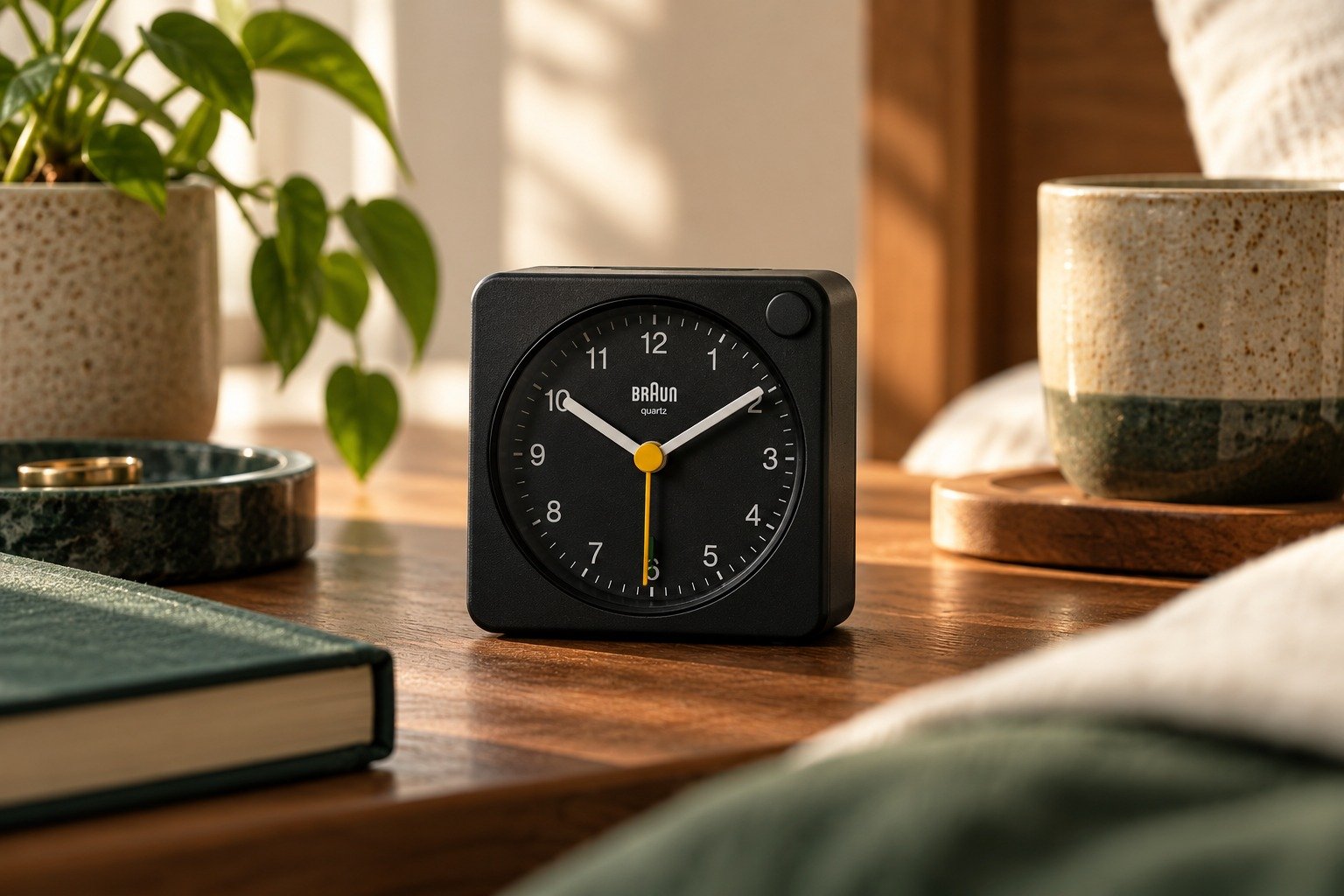
Braun BC02X Classic Analogue Travel Alarm Clock
A tiny analogue alarm clock that makes a case for legibility, standard batteries and doing one bedside job well.
Read assessment →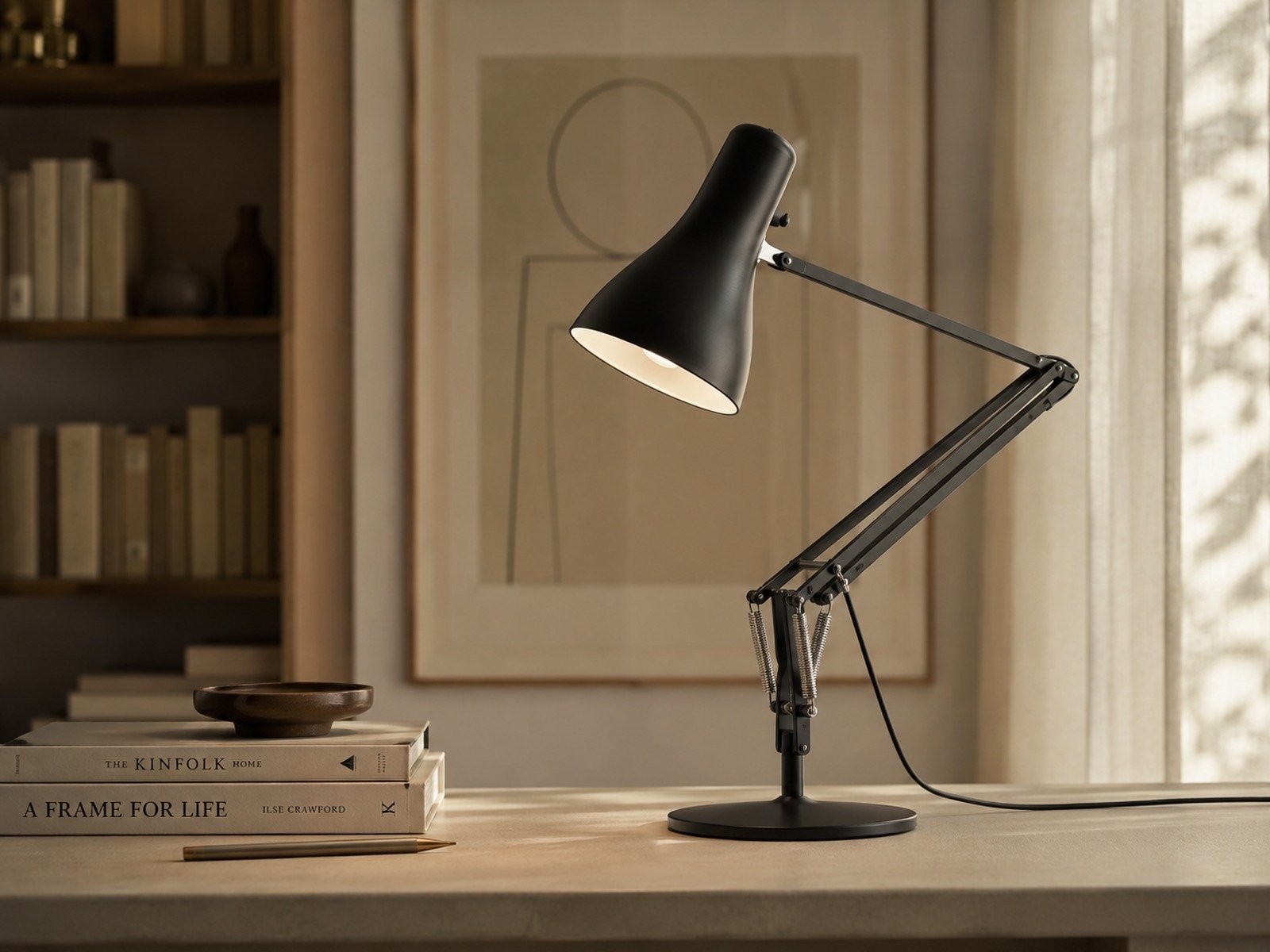
Anglepoise Type 75 Desk Lamp
A working light whose structure becomes part of the room.
Read assessment →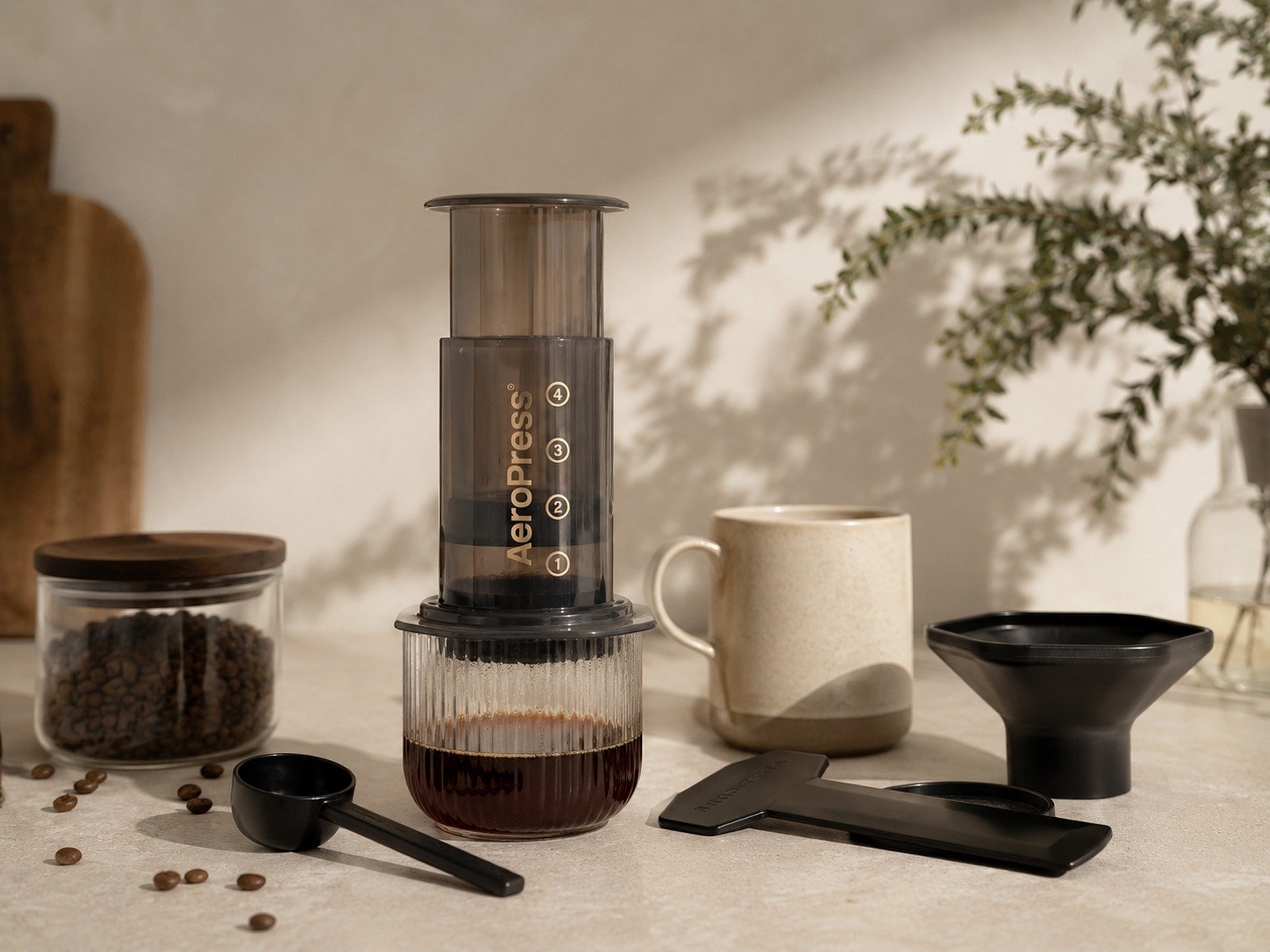
AeroPress Original Coffee Maker
A compact brewer built for experimentation rather than ceremony.
Read assessment →Continue reading